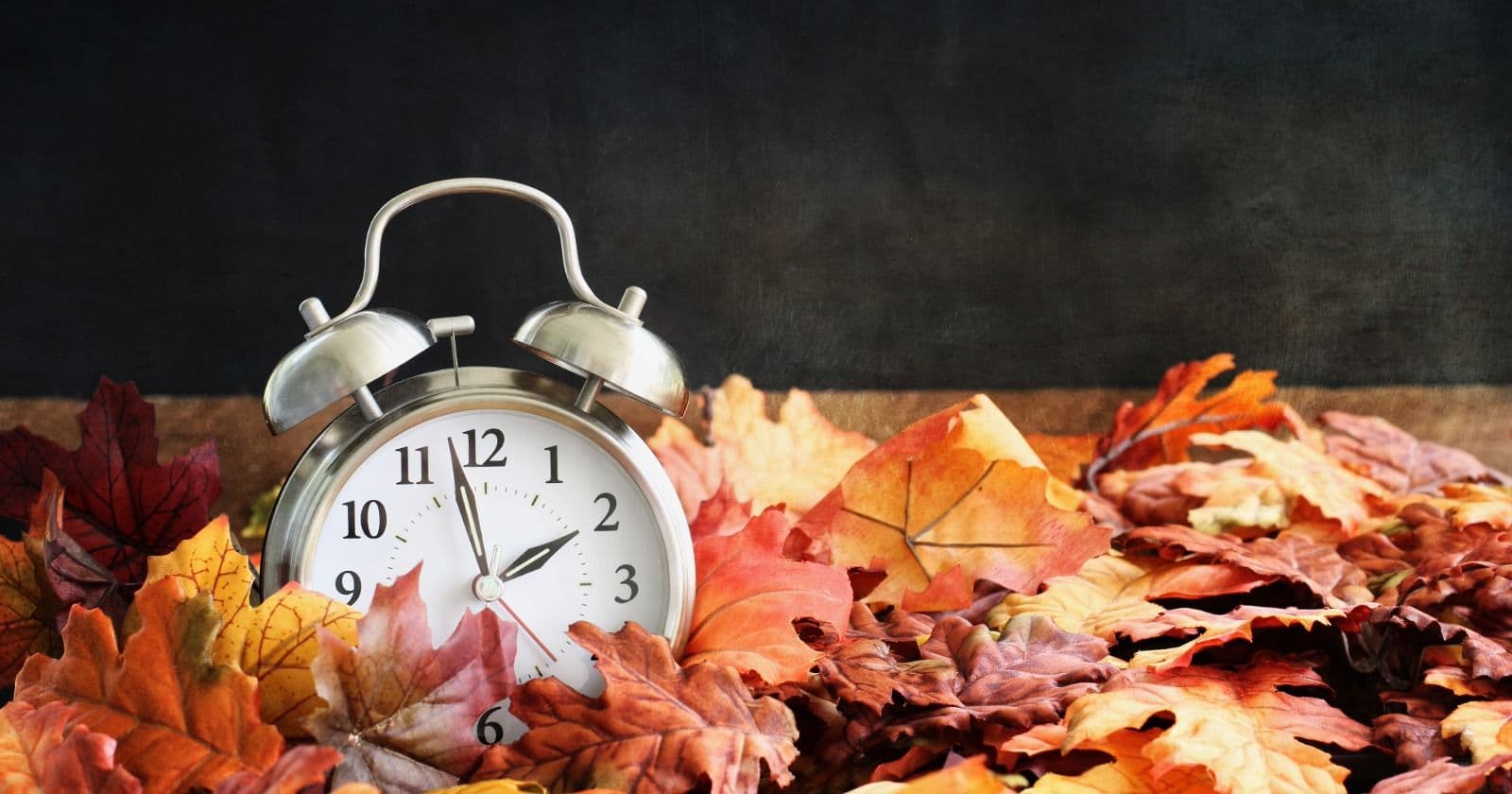
Daylight saving time ends November 1

See more PinScene stories in your Google results.
Clocks fall back at 2 a.m. on Sunday, November 1. You get an extra hour, and a few places skip the whole thing.
Daylight saving time ends at 2 a.m. on Sunday, November 1, 2026. At that moment, clocks fall back to 1 a.m., and the hour between 1 and 2 happens twice.
The rule is simple and the same every year. The National Institute of Standards and Technology, which keeps the nation's official time, says daylight saving time "ends at 2:00 a.m. on the first Sunday of November." In 2026 that's the very first day of the month.
What changes for you
Phones and computers switch on their own. Many stove, microwave, and older car clocks don't, and changing those before bed Saturday saves some confusion Sunday morning.
The extra hour makes Sunday 25 hours long. Mornings will be lighter for a while, and sunset will come about an hour earlier than the night before.
Where the clocks don't change
Not everyone switches. According to NIST, daylight saving time "is not observed in Hawaii, American Samoa, Guam, Puerto Rico, the Virgin Islands and the state of Arizona (with the exception of the Navajo Indian Reservation, which does observe DST)."
That Arizona exception makes the state a patchwork. For most of the year, driving from Phoenix onto the Navajo Nation means changing time, even though you haven't left the state. After November 1, Arizona and the Navajo Nation line up again until spring.
The current schedule dates to the Energy Policy Act of 2005, which extended daylight saving time to roughly 65% of the year, NIST says. Clocks spring forward again on the second Sunday in March, which in 2027 falls on March 14.
Sources
Frequently asked
When does daylight saving time end in 2026?
At 2 a.m. on Sunday, November 1, 2026. Clocks fall back one hour to 1 a.m., so the hour from 1 a.m. to 2 a.m. happens twice and that Sunday is 25 hours long.
Which states don't observe daylight saving time?
Hawaii and Arizona do not, except for the Navajo Nation in Arizona, which does. American Samoa, Guam, Puerto Rico, and the U.S. Virgin Islands also stay on standard time all year.
When do clocks change again after November?
Daylight saving time starts again on the second Sunday in March. In 2027 that is March 14, when clocks spring forward one hour at 2 a.m.