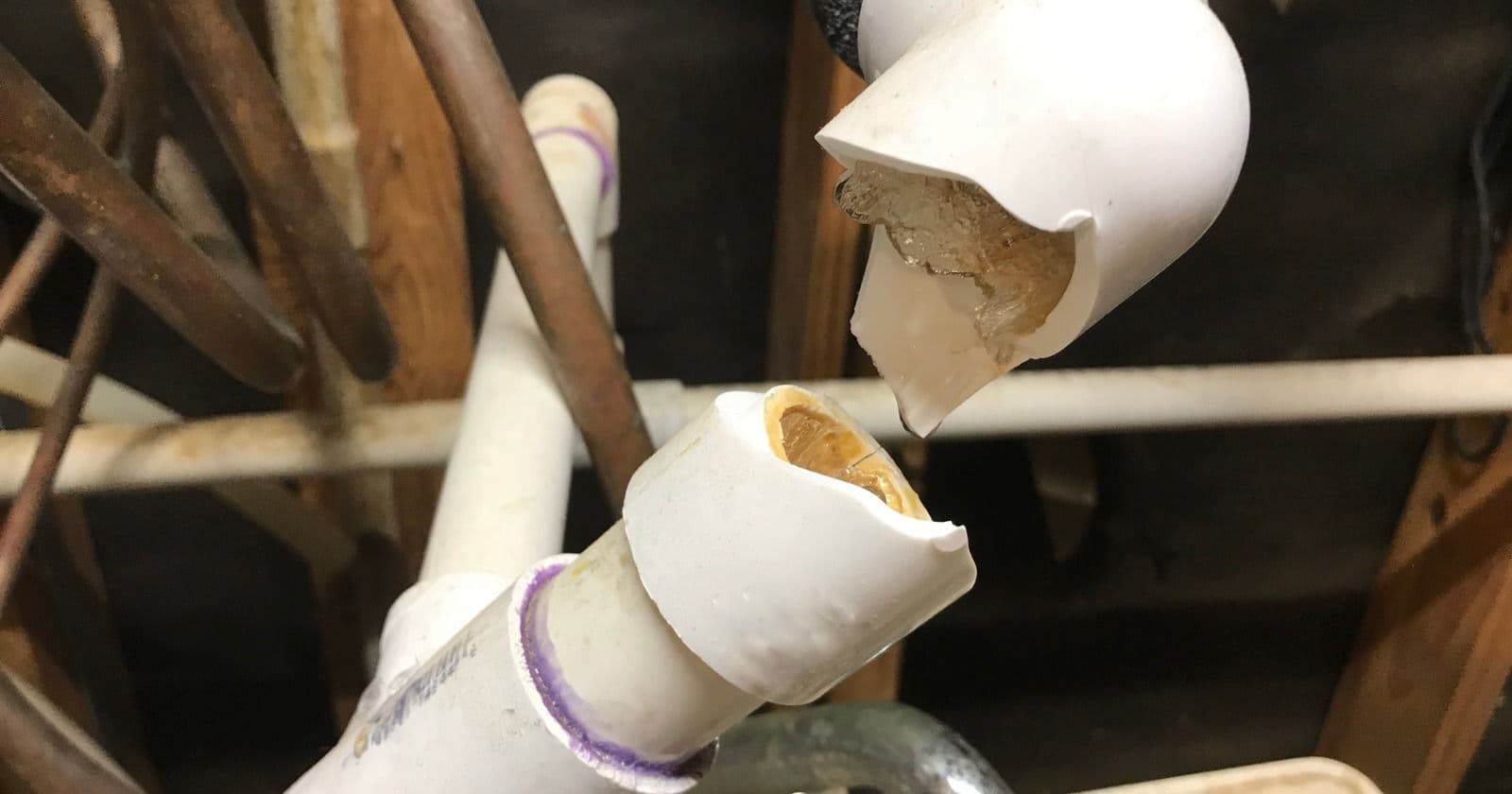
Why pipes freeze more often in the South, and how to keep yours from bursting

See more PinScene stories in your Google results.
Georgia led the country in frozen-pipe claim costs one recent winter. Here's how to keep your pipes from joining them.
Burst pipes aren't just a northern problem. Georgia was the No. 1 state for frozen-pipe losses at State Farm from August 2022 to August 2023, with $100 million in claim costs, the company said. Homes in warmer climates are often at greater risk, it says, because their pipes tend to run through attics and crawl spaces with little or no insulation.
How cold it has to get depends on who you ask. State Farm's consumer guide says pipes can freeze and burst below 32 degrees Fahrenheit. Its newsroom says pipes in uninsulated attics, crawl spaces, and exterior walls are most at risk below 20 degrees. The Insurance Institute for Business & Home Safety calls 20 degrees a temperature alert threshold that should cover most burst-pipe cases in southern states, according to Texas's Brazos River Authority. The National Weather Service issues a hard freeze warning when at least five hours below 26 degrees are expected. When the forecast heads into the low 20s, it's time to act.
The American Red Cross says the pipes most likely to freeze are the ones in unheated spaces like basements, crawl spaces, attics, garages, and kitchen cabinets, plus pipes that run along exterior walls with little or no insulation.
A few steps cover most of the risk:
- Let a faucet served by exposed pipes drip on very cold nights. The Red Cross says cold water. State Farm says warm water, preferably from a faucet on an outside wall.
- Open the kitchen and bathroom cabinet doors under the sinks so warmer air can reach the plumbing.
- Keep the thermostat at the same temperature day and night.
- Remove, drain, and store garden hoses, and close the inside valves that feed outdoor spigots.
- Insulate exposed pipes. Atlanta's Department of Watershed Management says insulating pipes and disconnecting your hose can save you from costly repairs.
If you're leaving town, the advice varies. The Red Cross says to leave the heat on at no lower than 55 degrees. Austin Water in Austin goes further: turn off your water at the meter and set the thermostat to 65 degrees or higher.
Find your shutoff valve now, before you need it. Austin Water says the property owner's shutoff valve is typically on your side of the water meter, in the meter box, and that you may need a water meter key, which most hardware stores sell.
If a pipe freezes or bursts
If you turn on a faucet and only a trickle comes out, suspect a frozen pipe, the Red Cross says. To thaw it, keep the faucet open and warm that section of pipe with an electric heating pad, a hair dryer, a space heater kept away from anything flammable, or towels soaked in hot water. Never use a blowtorch, a kerosene or propane heater, a charcoal stove, or any other open flame.
If a pipe has already burst, shut off the main water valve and leave the faucets open, State Farm says. Speed matters. A crack just one-eighth of an inch wide can spray more than 250 gallons of water a day.
The bills get big fast. State Farm says customers filed more than 20,000 frozen-pipe claims from 2024 through June 2025, totaling more than $628 million, with the average payment above $30,000. Across the industry, the average homeowners claim for water damage and freezing was $15,400 from 2019 to 2023, and about one in 60 insured homes files one of those claims, according to the Insurance Information Institute.
A standard HO-3 homeowners policy covers the accidental discharge of water from a plumbing system, the institute says. The catch is upkeep. State Farm lists frozen and burst pipes among losses typically not covered if "reasonable care to maintain the heat did not occur." And most policies have a vacancy clause that limits or excludes coverage once a home has sat empty for 30 to 60 days in a row.
Texas learned all of this at once in February 2021, when a winter storm knocked out power across the state. Insurers had received 500,196 claims by that July, according to the Texas Department of Insurance. During the storm, Gov. Greg Abbott told residents, "Get plumbers lined up," and "work with your insurance company in advance," the Texas Tribune reported.
Sources
- American Red Cross: Frozen pipes
- Insurance Information Institute: Facts and statistics, homeowners and renters insurance
- Insurance Information Institute: Am I covered?
- Insurance Information Institute: When no one's home, understanding vacancy insurance
- State Farm: Don't let pipes freeze
- State Farm newsroom: Frozen pipes, not so nice
- State Farm newsroom: Water plus ice, not so nice
- State Farm newsroom: Freeze plus thaw, a bad mix
- State Farm: Home and property claims
- National Weather Service Mobile: Freeze definitions
- Brazos River Authority: Protecting pipes from freezing
- Austin Water: Cold weather tips
- Atlanta Department of Watershed Management: Cold weather
- Spectrum News: February winter storm insurance claims at 500K
- Texas Tribune: Power outage and the bills that follow
Frequently asked
At what temperature do pipes freeze?
Sources differ. State Farm says pipes can freeze below 32 degrees, and that uninsulated pipes are most at risk below 20 degrees. The Insurance Institute for Business and Home Safety uses 20 degrees as an alert threshold for southern homes.
Should I drip hot or cold water to keep pipes from freezing?
Sources disagree. The American Red Cross says to let cold water drip from faucets served by exposed pipes. State Farm says warm water, preferably from a faucet on an outside wall. Either way, a slow drip on very cold nights helps.
Does homeowners insurance cover frozen pipes?
Usually, if the pipe bursts suddenly. Standard policies cover accidental discharge of water from plumbing. But claims can be denied if the owner didn't take reasonable care to keep the heat on, and coverage is limited for homes left empty for 30 to 60 days.